
How RNG Works in Online Games: A Beginner's Guide
Discover how RNG in online games works, why random number generators matter, and how they influence game outcomes, fairness, and results in online casino games.
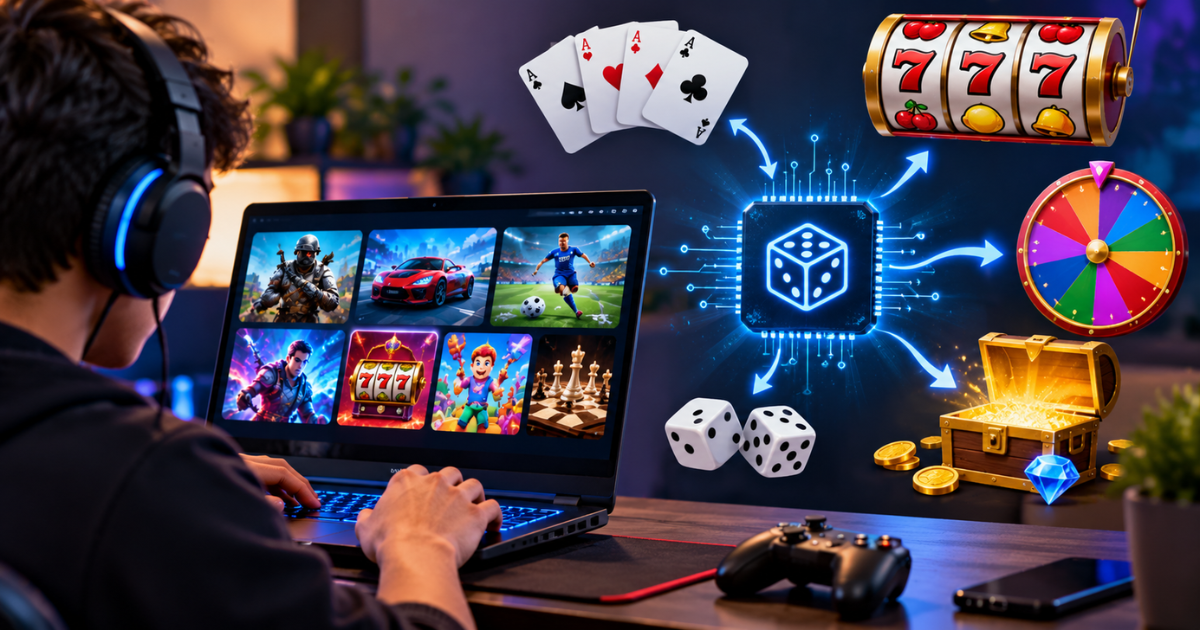
Online gaming has become more exciting than ever, with players enjoying everything from casual mobile games to competitive multiplayer experiences and digital casino games. But have you ever wondered why a game produces different results every time you play? Why does a dice roll change, a card appear unexpectedly, or a prize drop at a different moment?
One important technology behind these outcomes is a Random Number Generator, commonly known as RNG. Understanding RNG in online games helps beginners learn how games generate unpredictable results, why fairness matters, and what they should know before playing.
In this beginner-friendly guide, PostNoble explains how RNG works, where it is used, and how players can better understand the technology behind modern online gaming.
What Is RNG in Online Games?
RNG stands for Random Number Generator. It is a system designed to produce numbers that appear random or follow specific statistical properties. Games use these numbers to determine different outcomes, such as card combinations, dice results, item drops, or other in-game events.
For example, imagine playing a digital dice game. Instead of physically rolling a dice, the game uses an RNG system to determine the result. The number displayed on your screen is selected through the game's programmed process.
RNG is not limited to casino games. It also plays an important role in video games, mobile applications, role-playing adventures, and multiplayer experiences.
The main purpose of RNG is to introduce variation into gameplay. Without it, many games would produce predictable outcomes, making them less interesting and reducing the excitement of discovering something unexpected.
However, randomness does not automatically guarantee fairness. The way a game implements, tests, and manages its RNG system is equally important.
How Does a Random Number Generator in Gaming Work?
A random number generator in gaming works by producing values that a game uses to determine specific events. Although the exact process differs between games, the basic concept is relatively easy to understand.
Most gaming systems use one of two broad approaches: true random number generation or pseudorandom number generation.
1. True Random Number Generators
A True Random Number Generator, or TRNG, uses physical processes to generate random values. These processes may involve electronic noise or other unpredictable physical phenomena.
Because the numbers come from physical sources, they are not generated solely by following a mathematical sequence.
TRNG technology can be useful in applications that require strong randomness. However, it may require additional hardware and processing, making it less convenient for some ordinary gaming applications.
2. Pseudorandom Number Generators
A Pseudorandom Number Generator, or PRNG, uses mathematical algorithms to create sequences of numbers that appear random.
These systems generally begin with an initial value called a seed. The algorithm processes that seed to generate a sequence of numbers.
A traditional PRNG is deterministic, meaning that the same seed and algorithm will produce the same sequence. With a properly designed system, however, the resulting sequence can be difficult to predict without knowing the relevant internal information.
PRNGs are widely useful in software because they can generate numbers quickly and efficiently.
It is important to understand that not every PRNG is suitable for every purpose. Games involving security-sensitive transactions may require cryptographically secure random number generation rather than an ordinary game-oriented algorithm.
How RNG Works in Casino Games
RNG is particularly important in digital casino games because it helps determine outcomes without requiring physical cards, dice, or spinning wheels.
Different games use RNG in different ways, depending on their rules and design.
For example, in a digital card game, the system may use randomized processes to determine which cards are dealt. In a virtual dice game, the generated value determines the displayed result. In a digital slot game, the RNG contributes to selecting the outcome represented by the symbols on the screen.
Here are some common examples:
- Slot games: Random values help determine symbol combinations and game outcomes.
- Digital card games: RNG systems can determine card order and distribution.
- Virtual dice games: Generated values determine the result of a simulated dice roll.
- Roulette simulations: RNG can select a virtual result when the game uses a software-based wheel.
- Other casino-style games: Random values can support outcomes according to the game's programmed rules.
The exact implementation varies by game and provider. A game may also use predefined probability rules, paytables, or other design constraints to determine how generated values translate into outcomes.
A crucial point is that RNG does not mean every possible outcome has an equal chance of occurring. The probabilities depend on the game's design and implementation.
5 Important Things Beginners Should Know About RNG
Understanding the basic technology is helpful, but beginners should also know how randomness affects their experience. The following points explain the most important concepts in a practical way.
1. Random Results Are Not Predictable Patterns
One of the most common misunderstandings about RNG is the belief that previous results determine what will happen next.
Imagine a digital dice game produces the number four several times in a row. A player might assume that the next result must be different.
However, if each roll is generated independently and the game assigns equal probabilities to all six numbers, the chance of rolling a four remains one in six for the next roll.
Previous results do not automatically change the next result.
This principle is important because humans naturally search for patterns, even when outcomes are random.
2. Randomness Does Not Mean Equal Probabilities
A random outcome does not always mean that every result has the same probability.
For example, a game may be designed so that certain rewards appear more frequently than rare items. Both common and rare rewards can be selected through a randomized system, but their probabilities may be different.
Similarly, casino-style games can have different mathematical characteristics, including different payout structures and expected returns.
Beginners should check the published rules and probability information whenever it is available rather than assuming that all outcomes are equally likely.
3. RNG Does Not Guarantee a Win
RNG is a technology for generating outcomes, not a system designed to help individual players win.
In games involving prizes or money, a result can be favourable or unfavourable. Randomness does not guarantee a winning streak, a particular reward, or a return after a series of losses.
Be cautious of websites, videos, or applications that claim they can reliably predict RNG outcomes without credible evidence.
A genuine random system should not be treated as a shortcut to guaranteed success.
4. Testing Helps Support Fairness
Online games need more than a random number generator to establish trust. The software must also be implemented correctly and protected against manipulation.
Depending on the game and jurisdiction, testing may involve examining the random number generator, evaluating statistical behaviour, reviewing game mathematics, and checking whether the software follows its stated rules.
Independent testing and certification can provide useful evidence that a game meets specified standards. However, the level of oversight varies between providers and locations.
Players should look for transparent rules, credible testing information, and appropriate regulatory details rather than relying only on promotional claims.
5. Randomness Can Make Games More Engaging
RNG is useful beyond gambling-related entertainment. It also helps developers create varied and surprising gameplay.
In adventure games, randomized rewards can encourage exploration. In role-playing games, random encounters can make different sessions feel unique. In strategy games, randomized maps or starting conditions can create fresh challenges.
When used thoughtfully, RNG can improve replayability and make games feel less repetitive.
At the same time, developers need to balance randomness with player skill. If an outcome depends too heavily on luck, players may feel that their decisions have little influence on the result.
What Is the Difference Between RNG and Game Algorithms?
RNG and game algorithms are related, but they are not the same thing.
An RNG generates random or pseudorandom values. A game algorithm uses programmed instructions to determine how the game behaves.
For example, an RNG might generate a number between zero and one. The game's rules then use that value to select an item, calculate an outcome, or trigger an event.
A game can use both random and deterministic processes. Movement controls, scoring rules, and damage calculations may follow fixed formulas, while item drops or other events use RNG.
Understanding this difference helps beginners recognize that randomness is only one part of a game's overall design.
Can Players Predict RNG Outcomes?
In a properly implemented system, players generally cannot reliably predict future outcomes simply by studying previous results.
A pseudorandom system may be deterministic internally, but predicting its output can be impractical when the algorithm, seed, internal state, and security protections are properly managed.
Some games expose predictable or poorly implemented random systems, but that is a software weakness rather than proof that every RNG can be beaten.
Be careful with so-called RNG predictors, signal groups, or paid tools promising guaranteed outcomes in online casino games. Such claims may be misleading, and sharing account details with these services can create additional security risks.
For ordinary players, learning the rules and understanding probability is more useful than trying to identify patterns in random results.
How to Choose Online Games With Reliable RNG Systems
When selecting an online game, beginners should consider more than graphics, popularity, or promotional offers. The quality and transparency of the game's software also matter.
Look for clear explanations of game rules and, where relevant, published odds or probability information. For games that involve real-money wagering, check whether the operator is appropriately licensed in your jurisdiction and whether independent testing information is available.
It is also worth reviewing the provider's reputation, privacy practices, account security, and customer support.
Remember that a familiar brand name or attractive website does not automatically prove that its games are fair. Independent verification and transparent information are more meaningful indicators.
For casual video games, beginners can focus on whether randomized mechanics feel balanced and enjoyable. A good game should offer an experience that remains engaging without making players feel that every outcome depends entirely on luck.
Final Thoughts
RNG is an essential technology in many modern online games. From virtual dice and digital cards to randomized rewards in adventure games, it helps developers create varied outcomes and more engaging experiences.
Understanding RNG in online games allows beginners to distinguish randomness from predictable patterns, recognize the difference between random values and game rules, and understand why independent testing can matter.
The concept behind a random number generator in gaming is straightforward: it produces values that a game uses to determine outcomes. However, the quality of the implementation, the probabilities assigned to different results, and the transparency of the provider all influence how trustworthy a particular game may be.
At PostNoble, the goal is to make gaming technology easier to understand through clear and practical guides. By learning how RNG works in casino games and other digital experiences, beginners can make better-informed decisions and enjoy gaming with more realistic expectations.
A final tip for beginners: Treat randomness as part of the gaming experience, not as a predictable strategy. Choose games responsibly, understand their rules, and never assume that past outcomes guarantee future results.