How AI Is Changing Jobs and Skills in 2027
Explore how AI is changing jobs in 2027, transforming industries, creating new career opportunities, and reshaping the skills professionals need to succeed in an increasingly AI-driven workplace.
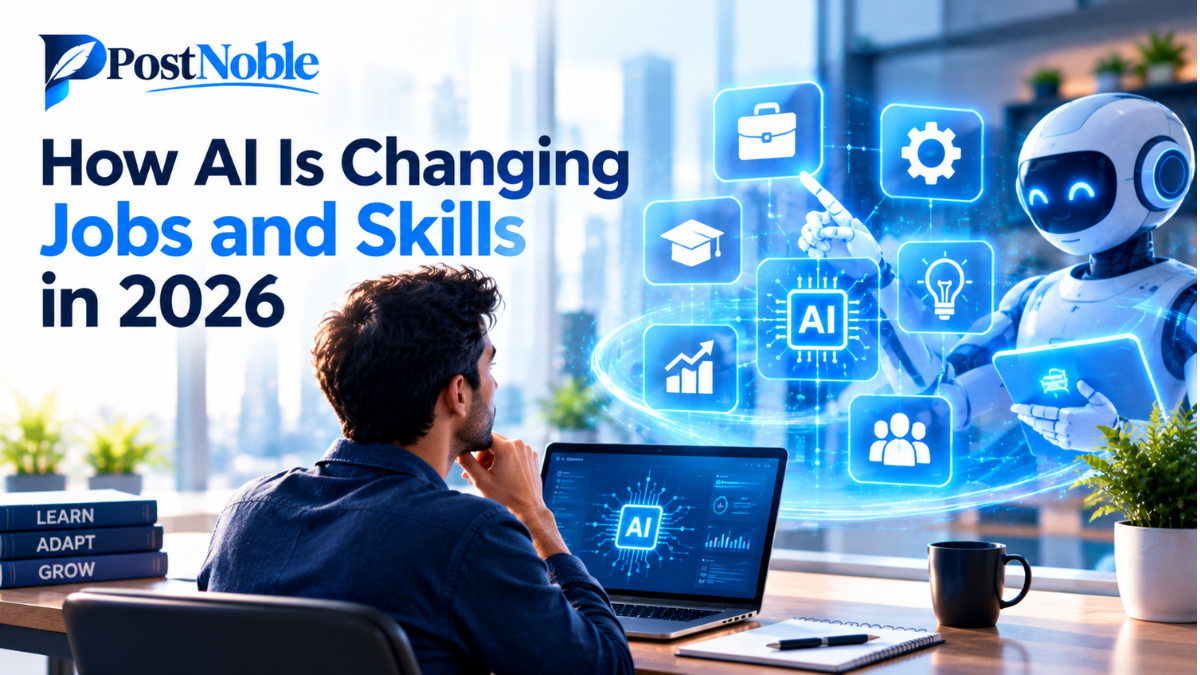
Artificial intelligence is no longer just a technology used by large companies or computer experts. In 2027, AI tools are becoming part of everyday working life, helping people write content, analyze information, communicate with customers, create designs, and complete repetitive tasks. From small businesses to global organizations, companies are finding new ways to use AI to improve productivity and save time.
These changes are also raising important questions. Will AI replace certain jobs? Which skills will remain valuable? And how can employees prepare for a workplace where humans and intelligent machines work together?
Understanding how AI is changing jobs in 2027 can help students, professionals, freelancers, and business owners make better career decisions. Instead of viewing AI only as a threat, it is useful to understand how it is changing responsibilities, creating new opportunities, and increasing the importance of human skills.
How AI Is Transforming the Modern Workplace
AI is changing the way people approach their daily responsibilities. Tasks that once required hours of manual effort can now be completed more quickly with the help of automation and AI-powered software.
For example, marketing teams can use AI to brainstorm campaign ideas, customer support teams can handle common questions through chatbots, and data analysts can identify patterns in large datasets more efficiently. Developers can also use AI coding assistants to generate suggestions, identify errors, and understand unfamiliar code.
However, faster task completion does not mean that every job can be fully automated. Most roles involve a combination of technical knowledge, communication, judgment, creativity, and decision-making. AI can support these activities, but human oversight remains important, especially when decisions involve people, money, safety, or sensitive information.
The real AI impact on future jobs will depend on how businesses adopt these tools and how workers adapt to changing expectations.
7 Ways AI Is Changing Jobs and Skills in 2027
1. Automating Repetitive Tasks
One of the most noticeable changes is the automation of routine work. AI-powered systems can organize documents, summarize reports, process basic requests, manage schedules, and assist with data entry.
This allows employees to spend less time on repetitive activities and more time on work that requires problem-solving or personal interaction.
For example, an administrative professional might use AI to prepare meeting summaries and draft emails. Instead of spending hours organizing information, they can focus on coordinating projects and supporting their team.
Automation can also change the number and type of tasks required in certain roles. Workers who learn to use these tools effectively may be better prepared for evolving responsibilities.
2. Creating New Career Opportunities
While AI may reduce the need for some routine tasks, it is also creating demand for new types of work. Businesses need people who can develop AI systems, manage their implementation, evaluate their performance, and ensure they are used responsibly.
Emerging opportunities include AI operations, automation consulting, AI-assisted content production, data analysis, AI quality testing, and technology governance.
Not every new opportunity requires advanced programming skills. Some positions focus on understanding business needs, selecting suitable tools, training employees, or checking AI-generated results.
For job seekers, this means exploring how existing experience can be combined with AI knowledge. A marketing professional, for instance, can learn AI-powered research and campaign analysis without necessarily becoming a software engineer.
3. Increasing the Value of Digital Skills
Digital literacy is becoming increasingly important across industries. Employees are expected to understand the software they use, work with digital information, and recognize where AI can improve their performance.
Knowing how to write effective prompts, check AI-generated information, protect confidential data, and combine different digital tools can provide a practical advantage.
However, simply knowing how to operate an AI tool is not enough. Workers also need to understand the task they are trying to complete and evaluate whether the output is accurate and useful.
The most valuable employees will often be those who combine industry knowledge with practical AI skills.
4. Changing the Hiring Process
Recruitment is also evolving as employers use AI to support activities such as sorting applications, identifying relevant qualifications, scheduling interviews, and analyzing recruitment data.
At the same time, companies are increasingly interested in candidates who can demonstrate adaptability and an ability to learn new technologies.
A degree or professional qualification remains valuable in many fields, but practical experience, communication, critical thinking, and the ability to solve real problems also matter.
Job seekers should focus on demonstrating what they can do rather than relying only on certificates. Building a portfolio, completing practical projects, and explaining how AI supports their work can help make their skills more visible.
Employers should also ensure that AI-assisted recruitment processes are monitored for errors and unfair bias.
5. Making Human Skills More Important
AI can generate text, analyze data, and suggest solutions, but successful workplaces still depend on people who can understand context, build relationships, and make responsible decisions.
Communication, empathy, leadership, creativity, negotiation, and critical thinking remain important across many professions.
Consider a customer service employee. An AI chatbot may answer a straightforward question, but a complicated complaint may require patience, emotional understanding, and a thoughtful response. Similarly, a manager may use AI-generated reports but still need to consider team morale, business priorities, and long-term consequences.
This is why the skills needed in the AI era include both technical abilities and human strengths.
6. Supporting Freelancers and Small Businesses
AI tools are making certain professional tasks more accessible to freelancers, entrepreneurs, and small teams. A single person can use AI to help research a topic, prepare a content outline, generate design concepts, organize customer feedback, or develop a first draft of a business proposal.
These tools can reduce the time required to move from an idea to an initial result. They may also help smaller businesses compete more effectively when their budgets and teams are limited.
Nevertheless, AI-generated work still requires review. Incorrect information, generic writing, copyright concerns, and a lack of originality can create problems if users publish content without checking it.
Freelancers who combine AI efficiency with personal expertise, original ideas, and reliable service can offer greater value to their clients.
7. Encouraging Continuous Learning
Perhaps the biggest workplace change is the growing need to keep learning. Skills that are useful today may need to be updated as tools, customer expectations, and business processes evolve.
Employees cannot always depend on the knowledge they gained at the beginning of their careers. They may need to learn new software, understand AI-assisted workflows, or develop stronger analytical and communication abilities.
Continuous learning does not mean studying every new AI tool that appears. It means identifying the technologies relevant to your profession and learning how to use them responsibly.
Short courses, hands-on projects, professional communities, and workplace training can all help people stay prepared for change.
Which Skills Should Professionals Develop in 2027?
The most useful approach is to build a balanced skill set rather than focusing exclusively on AI technology.
Professionals should consider developing:
- AI literacy: Understand what AI tools can do, where they struggle, and when human review is necessary.
- Critical thinking: Check facts, question assumptions, and evaluate recommendations before acting on them.
- Communication: Explain ideas clearly, collaborate with colleagues, and understand customer needs.
- Data literacy: Interpret information, recognize patterns, and make decisions based on evidence.
- Problem-solving: Break complicated challenges into manageable steps and find practical solutions.
- Adaptability: Learn unfamiliar tools and adjust to changing workplace requirements.
- Ethical awareness: Respect privacy, recognize potential bias, and use AI responsibly.
The right combination depends on the profession. A designer may benefit from learning AI-assisted creative tools, while a finance professional may focus on data analysis and verification. A teacher may explore personalized learning tools while maintaining strong classroom communication and judgment.
Will AI Replace Human Jobs in the Future?
AI will likely automate some tasks, reshape existing roles, and create demand for new capabilities. However, the effect will not be the same across every occupation or industry.
Jobs involving predictable, repetitive activities may face greater automation pressure. Roles requiring complex judgment, hands-on work, interpersonal understanding, or accountability may change differently. Even within one profession, some responsibilities may be automated while others become more important.
It is therefore more useful to examine how a job is changing than to assume that an entire occupation will disappear. Workers can prepare by learning which tasks AI can handle, identifying where human expertise remains essential, and developing skills that complement automation.
Businesses also have a responsibility to provide appropriate training, communicate changes clearly, and consider the effects of automation on employees.
How PostNoble Can Help Readers Prepare for the AI Era
At PostNoble, readers can explore practical technology insights, digital trends, and emerging developments that influence modern work and everyday life. Understanding AI does not require becoming a technical expert overnight.
Start by exploring tools relevant to your profession, testing them on low-risk tasks, and checking their results carefully. Then identify one or two skills that could make your work more efficient or valuable.
Small, consistent steps can make technological change easier to manage and help professionals approach new opportunities with greater confidence.
Conclusion
Understanding how AI is changing jobs in 2027 is essential for anyone planning a career, managing a business, or adapting to new workplace expectations. AI is automating repetitive tasks, influencing recruitment, supporting small businesses, and creating demand for new technical and professional capabilities.
At the same time, human judgment, creativity, communication, and ethical decision-making remain important. The future of work will not depend only on who has access to the most advanced technology, but also on who knows how to use it effectively.
For professionals, the best strategy is to remain curious, build relevant digital skills, and continue learning. By combining human expertise with responsible AI use, workers can become better prepared for the opportunities and challenges of the evolving workplace.